Research

Overview

My research asks how plant–microbe interactions regulate the fate of nitrogen in agroecosystems, using microbial nitrogen transformations to understand how nitrogen is partitioned between losses to the environment and plant acquisition.

I am particularly interested in how microbial functional guilds respond to plant traits, environmental conditions and ecological history. As climate warming intensifies, understanding whether these responses can sustain nitrogen retention, plant nutrition and the resilience of soil–plant systems is increasingly important.

01

Microbial guilds → nitrogen fate

Microbial controls on nitrogen retention and loss

Nitrogen-transforming microorganisms determine how rapidly nitrogen moves through soils and which pathways dominate. My work investigates the functional ecology of nitrifiers, denitrifiers and N₂O-reducing microorganisms, with particular emphasis on ecological differentiation among ammonia-oxidising archaea and bacteria and the contribution of comammox Nitrospira.

I am interested in how soil properties, substrate availability, fertilisation and nitrification inhibitors alter the abundance and activity of these guilds, and how such changes influence nitrogen retention within the soil–plant system and gaseous nitrogen losses, including N₂O emissions.

AOA & AOB Comammox Denitrifiers N₂O Nitrification inhibitors Functional guilds
02

Plants → rhizosphere nitrogen

Plant regulation of rhizosphere nitrogen availability

Plants are active regulators of rhizosphere biogeochemistry. I investigate how genotype, developmental stage and root-derived compounds alter nitrification and the ecology of nitrogen-transforming microorganisms, thereby changing the forms and retention of nitrogen available within the rhizosphere.

A major focus is biological nitrification inhibition (BNI) in cereals and the role of root metabolites in mediating this process. This work asks when plant-mediated control of nitrification is expressed, which microbial guilds respond, and whether variation among plant genotypes can be used to improve nitrogen acquisition while reducing nitrogen losses.

BNI Root exudates Plant genotype Growth stage Rhizosphere microbiome Plant N acquisition
03

Environmental change → ecosystem function

Environmental drivers on microbial resilience and ecosystem function

Soil microbial communities are continuously shaped by temperature, resource availability, agricultural management and their own ecological history. My work examines how these drivers reorganise microbial communities and food webs and how those changes propagate to biogeochemical processes and plant performance.

Building on this work, I am increasingly interested in resistance, recovery and ecological legacy under repeated disturbance. In a warming climate, a central question is whether past environmental conditions alter future microbial responses and whether those history-dependent responses enhance or erode the capacity of soil–plant systems to retain nitrogen and maintain function.

Climate warming Long-term management Resistance Recovery Legacy effects Microbial food webs

Approaches

From microbial mechanisms to field‑scale ecosystem function

I work across experimental scales to connect direct microbial responses with soil nitrogen processes, plant–rhizosphere interactions and outcomes under realistic agricultural conditions.

Direct mechanisms

Microbial and cellular scale

Controlled microbial systems allow me to isolate direct responses of nitrifiers and other functional guilds to plant-derived compounds, inhibitors and environmental conditions.

Pure cultures Functional assays Physiological responses
Illustration of a microbial culture at the microbial and cellular scale

Biogeochemical consequences

Soil process scale

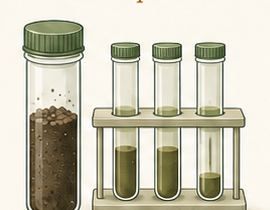
Laboratory soil incubations provide a controlled bridge between microbial mechanisms and nitrogen transformation processes in soil, allowing environmental drivers and process rates to be quantified directly.

Soil incubations Stable isotopes Process measurements
Illustration of controlled soil incubation experiments

Rhizosphere regulation

Plant–soil scale

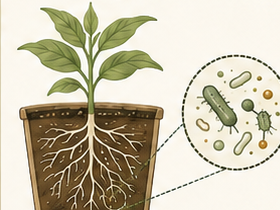
Plant–soil experiments reveal how genotype, development and root-derived chemistry reshape rhizosphere microbial communities and influence nitrogen availability to plants.

Pot experiments Rhizosphere sampling Root metabolites Microbiome analysis
Illustration of a plant–soil experiment and rhizosphere microorganisms

Ecological relevance

Field and agroecosystem scale

Field studies test whether mechanisms identified under controlled conditions persist across realistic environmental heterogeneity and translate into plant and ecosystem outcomes.

Field experiments Long-term management Ecosystem outcomes
Illustration of field-scale agricultural experiments